1/26/2026
Awning Replacement Cost: Choosing the Right Option
Awning replacement cost depends on size, materials, and climate demands. See what drives pricing and how to budget for long-lasting shade.
Introduction: Why Awning Replacement Cost Isn’t One-Size-Fits-All
If you’re researching awning replacement cost, chances are your existing awning is showing signs of wear — fading fabric, bent frames, sagging panels, or damage from years of intense sun and weather. In desert climates like Las Vegas, St. George, Phoenix, and Mesquite, awnings take a beating far faster than in milder regions.
Many homeowners assume replacement pricing is simple, but awning replacement cost can vary widely depending on material, size, mounting method, and whether you’re upgrading to a more durable system. Replacing an awning isn’t just about restoring shade — it’s often an opportunity to improve performance, reduce heat, and avoid repeating the same issues a few years down the road.
In this guide, we’ll explain what impacts awning replacement cost, what most homeowners realistically pay, when replacement makes sense over repair, and how to choose an option that holds up long-term in extreme heat.
What Is Awning Replacement and How Does It Work?
Awning replacement typically involves removing an existing awning system and installing a new one in its place. This can mean replacing just the awning material, the entire frame, or upgrading to a completely different style or system.
In older homes, many awnings were built with fabric or lightweight components that weren’t designed for long-term exposure to desert sun. Over time, UV exposure causes materials to fade, crack, or weaken structurally, making replacement the safer and more cost-effective choice.
Replacement projects may include:
- Removing damaged or outdated awning structures
- Evaluating mounting points and wall integrity
- Installing new aluminum or upgraded awning systems
- Adjusting size, coverage, or design for better shade performance
Because replacement involves both removal and installation, pricing reflects more than just the new awning itself — it also accounts for labor, site conditions, and any necessary upgrades.
Average Awning Replacement Cost in Desert Climates
While every project is different, most homeowners can expect awning replacement cost to fall within a predictable range based on system type and scope.
Basic replacement projects, where an older awning is swapped for a similar-sized aluminum system, often start in the lower range. Larger patios, custom designs, or premium aluminum systems increase the overall investment.
In desert markets like Southern Nevada, Utah, and Arizona, many homeowners choose to replace outdated awnings with aluminum systems specifically engineered for heat resistance, which typically costs more upfront but delivers far better longevity.
Rather than focusing solely on the lowest price, most homeowners benefit from comparing replacement cost against expected lifespan, maintenance requirements, and heat-blocking performance.
Though in most cases, awning replacement cost ranges from $2,500 to $8,000+, depending on size, materials, and installation requirements. Smaller aluminum awning replacements often fall toward the lower end, while larger patios, insulated systems, or premium aluminum designs push costs higher. Homes in desert climates may also see increased pricing due to wind-load standards and structural requirements.
Key Factors That Impact Awning Replacement Cost
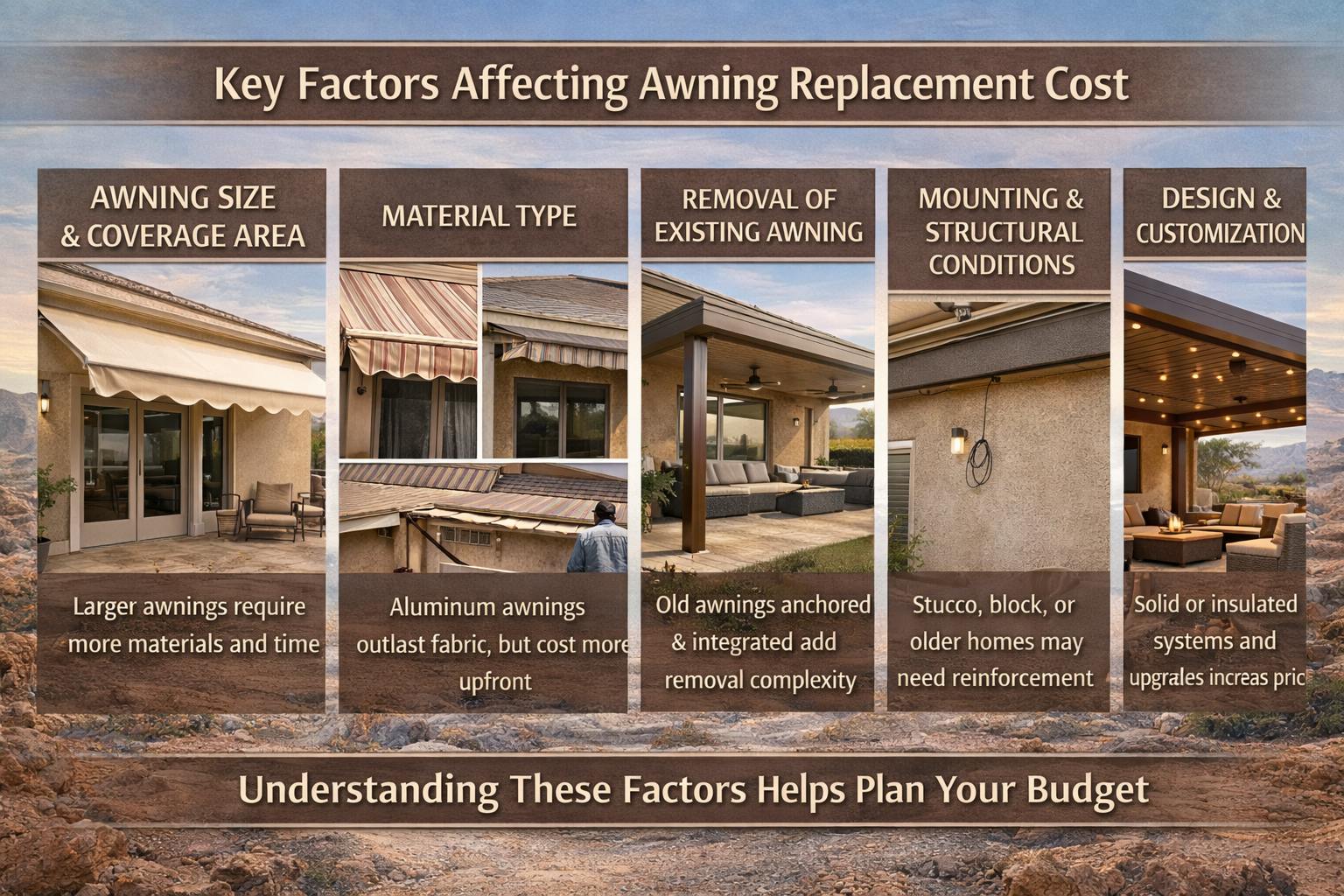
Several factors influence how much replacing an awning will cost. Understanding these helps explain why two homes with similar patios can receive very different estimates.
1. Awning Size and Coverage Area
Larger awnings require more materials and longer installation time. Extending coverage for patios, outdoor kitchens, or poolside areas increases cost but also improves usable space.
2. Material Type
Aluminum awnings typically cost more than fabric options but offer dramatically better durability in hot climates. Fabric awnings may be cheaper initially but often need replacement much sooner.
3. Removal of Existing Awning
If the old awning is heavily anchored, rusted, or integrated into the home’s structure, removal can add labor time and cost.
4. Mounting and Structural Conditions
Homes with stucco, block, or older framing may require reinforcement or additional mounting hardware to safely support a new awning system.
5. Design and Customization
Solid roof, lattice, insulated, and premium aluminum systems all fall at different price points. Color choices, trim details, and integrated lighting can also affect cost.
6. Local Climate and Code Requirements
Desert regions often require awnings to meet specific wind-load or structural standards, which can impact materials and installation methods.
Repair vs Replacement: When Replacement Makes More Sense
Homeowners often ask whether repairing an existing awning is cheaper than replacing it. In some cases, minor repairs are possible — but in desert environments, replacement is frequently the better long-term decision.
Replacement is usually the smarter option if:
- The awning frame is bent, rusted, or structurally compromised
- Fabric has faded, torn, or lost tension multiple times
- The system no longer provides adequate shade or heat reduction
- Repair costs approach a significant percentage of replacement cost
Replacing an aging awning eliminates recurring repair expenses and allows homeowners to upgrade to modern materials that perform far better in extreme heat.
The Awning Replacement Process: What to Expect
Understanding the replacement process helps homeowners feel confident about timelines, pricing, and outcomes.
1. Initial Consultation and Quote
The process starts with a free, no-obligation quote. Measurements are taken, existing conditions are evaluated, and replacement options are discussed.
2. Design and System Selection
Homeowners choose the awning style, material, color, and coverage area that best fits their space and budget.
3. Removal of Existing Awning
The old awning is safely removed, and mounting points are inspected to ensure the structure is ready for the new installation.
4. Installation
Most aluminum awning replacements are completed in one to two days by experienced crews, with minimal disruption to the home.
5. Final Inspection and Cleanup
Once installed, the system is checked for stability, proper drainage, and overall finish before the project is completed.
Why Aluminum Awnings Often Cost More — and Why They’re Worth It
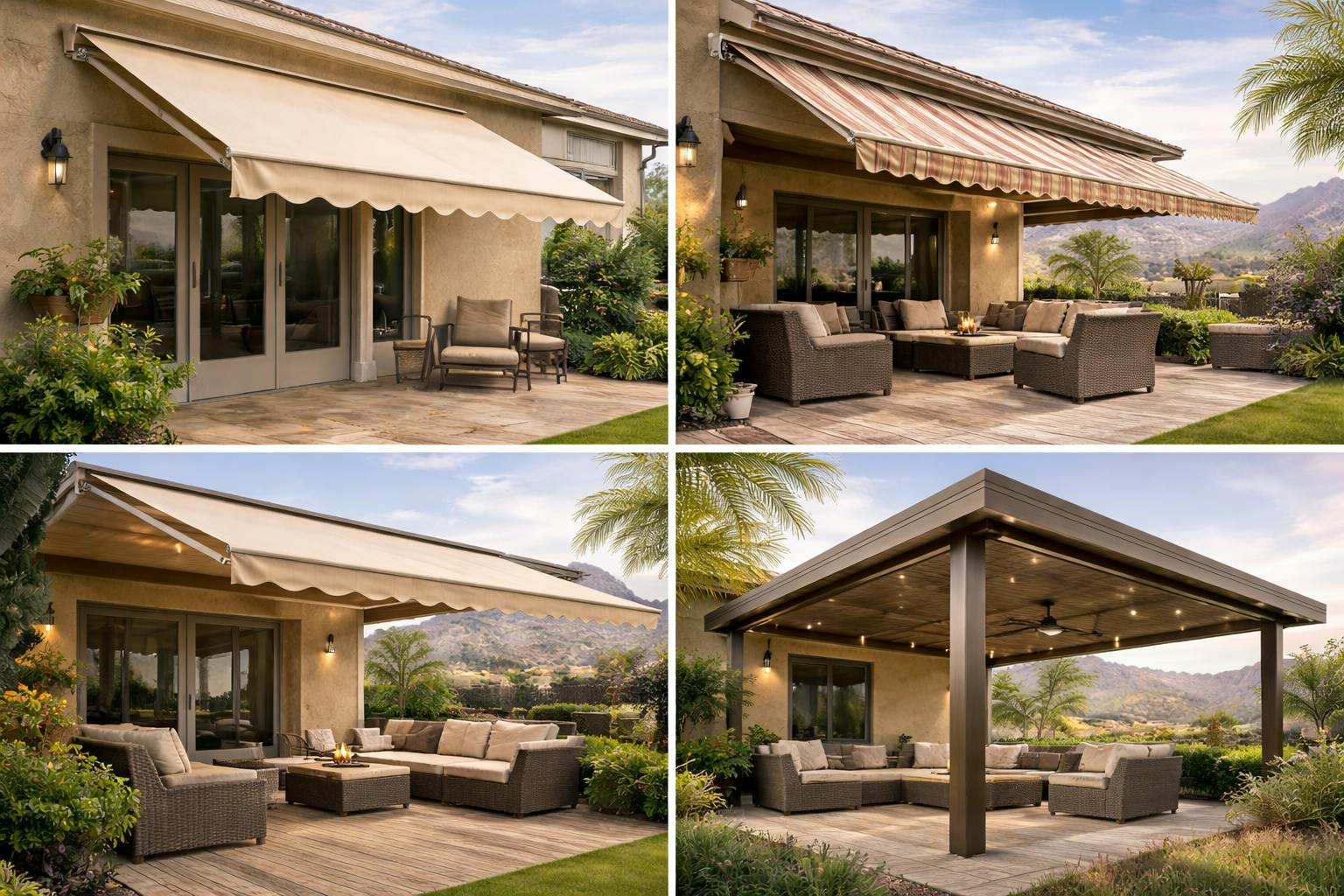
Aluminum awnings generally have a higher replacement cost than fabric systems, but they offer clear advantages in desert climates.
They don’t rot, warp, or fade like fabric or wood alternatives. Aluminum awnings also provide better heat reflection, require little to no maintenance, and maintain their appearance for decades.
For homeowners replacing an older awning that failed prematurely, upgrading to aluminum often eliminates future replacement costs entirely — making the higher upfront investment more cost-effective over time. To better understand pricing, review deck awning cost. You can also explore how much do awnings cost for a broader overview. For aluminum-specific pricing, see how much does an aluminum awning cost.
Frequently Asked Questions About Awning Replacement Cost
How much does it cost to replace an awning?
Awning replacement cost depends on size, material, and installation complexity, but most homeowners pay more for durable aluminum systems that last significantly longer than fabric options.
Is it cheaper to repair or replace an awning?
Minor repairs may be cheaper short-term, but replacement is often more cost-effective when the awning is aging, damaged, or poorly suited for desert conditions.
How long does awning replacement take?
Most projects are completed in one to two days once materials are ready.
Do aluminum awnings increase home value?
Yes. Durable, professionally installed awnings improve outdoor usability, reduce heat exposure, and enhance curb appeal.
Does awning replacement require permits?
Requirements vary by location, but reputable installers handle any necessary code or permit considerations.
Conclusion: Investing Wisely in Awning Replacement
Awning replacement cost isn’t just about swapping one structure for another — it’s about choosing a solution that performs better, lasts longer, and makes your outdoor space usable again.
For homeowners in desert climates, replacing outdated awnings with modern aluminum systems often delivers the best balance of durability, heat reduction, and long-term value. While the upfront cost may be higher, the payoff comes through reduced maintenance, better comfort, and fewer future replacements.
If you’re considering replacing an existing awning, getting an expert evaluation from Patio Cover Concepts ensures you understand your options, pricing, and the long-term benefits of upgrading.
Get a free, no-obligation awning replacement quote and explore durable options designed specifically for desert homes.
Ready to reclaim your outdoor space?
Quality work from honest people. With best price in town.
Jay Williams